The True Bible Story of Faith, Courage and God's Deliverance
Why Would Daniel Risk His Life Just to Pray?
Imagine waking up to discover that your ordinary prayers have become a capital offence. You have thirty days to choose between the law of a powerful king and the God you have served for years. What would you do?
In Daniel chapter 6, a respected government official faces precisely that choice. His enemies cannot expose dishonesty or negligence, so they turn his faithfulness into a trap. What follows is one of the Bible’s most memorable accounts of courage, conspiracy and extraordinary deliverance. Yet its deepest message is not simply that Daniel survived lions. It is that God remains sovereign even when human power appears absolute.
Why Did Daniel’s Enemies Plot Against Him?
Daniel had lived through profound political change. The opening chapters of his book place him among Judean exiles serving in Babylon. By chapter 6, the narrative describes a new ruler, Darius the Mede, organising his realm under 120 satraps and three senior administrators, including Daniel (Daniel 6:1–3). Daniel’s exceptional service made him a candidate for even greater responsibility.
His rivals searched for corruption or incompetence in his administration. They found neither. Daniel was reliable, and his public duties gave them no legitimate accusation (Daniel 6:4–5). That detail matters: this is not a tale of a reckless man seeking confrontation. His integrity came first; the confrontation was manufactured by others.
The officials proposed that for thirty days no one could make a petition to any god or person except the king. Breaking the order would mean being thrown into a den of lions (Daniel 6:6–9). Their claim that the officials supported the decree should be understood as part of their pitch, not proof that Daniel consented. Darius signed it, apparently failing to recognise the danger to his trusted servant.
The story refers to the unalterable law of the Medes and Persians. This is the legal predicament described in the narrative; it should not be treated as proof that every historical Persian royal order was impossible to reverse.
Why Did Daniel Pray Three Times a Day Facing Jerusalem?
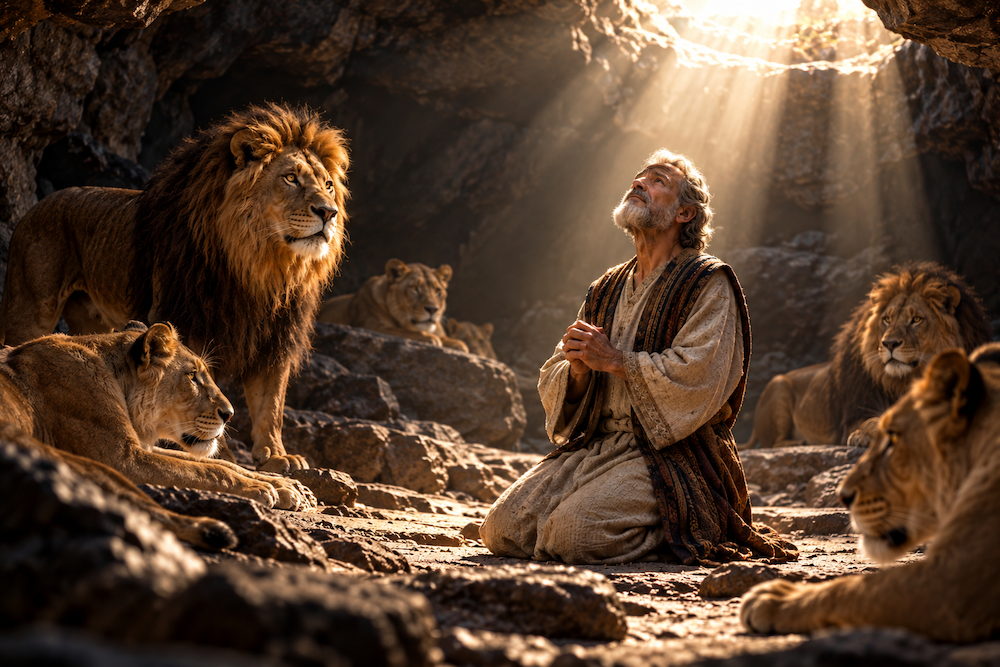
When Daniel learned that the decree had been signed, he went to his upper room, where the windows faced Jerusalem. He knelt and prayed three times a day, giving thanks to God just as he had done before (Daniel 6:10). The extraordinary act was an ordinary habit continued under extraordinary pressure.
Jerusalem mattered because Daniel was an exile. Solomon’s prayer had envisaged God’s people praying toward their land and city when carried away (1 Kings 8:46–50). Facing Jerusalem expressed covenant memory and hope; it was not a magical direction that made prayer effective.
Nor does the passage describe Daniel staging a new public protest. His open windows and established rhythm were already part of his life. The conspirators found him praying and asking God for help (Daniel 6:11). The chapter does not preserve the words of that prayer, and it does not say whether Daniel expected a miracle.
The decisive detail is that Daniel prayed and gave thanks as he had previously done. Faithfulness was a settled pattern, not a last-minute performance. (Paraphrase of Daniel 6:10.)
How Did Daniel End Up in the Lions’ Den?
The officials presented their accusation to Darius, emphasising that Daniel was one of the exiles from Judah (Daniel 6:12–13). That description underscored his outsider status. The king was deeply distressed and worked until sunset to find a way to rescue him, but the accusers insisted that the decree could not be changed (Daniel 6:14–15).
Daniel was taken to the lions’ den. Darius expressed hope that the God Daniel served continually would deliver him. A stone was placed over the entrance and sealed with royal and noble signets, preventing interference (Daniel 6:16–17). The king returned to the palace, refused diversions, fasted and spent a sleepless night (Daniel 6:18).
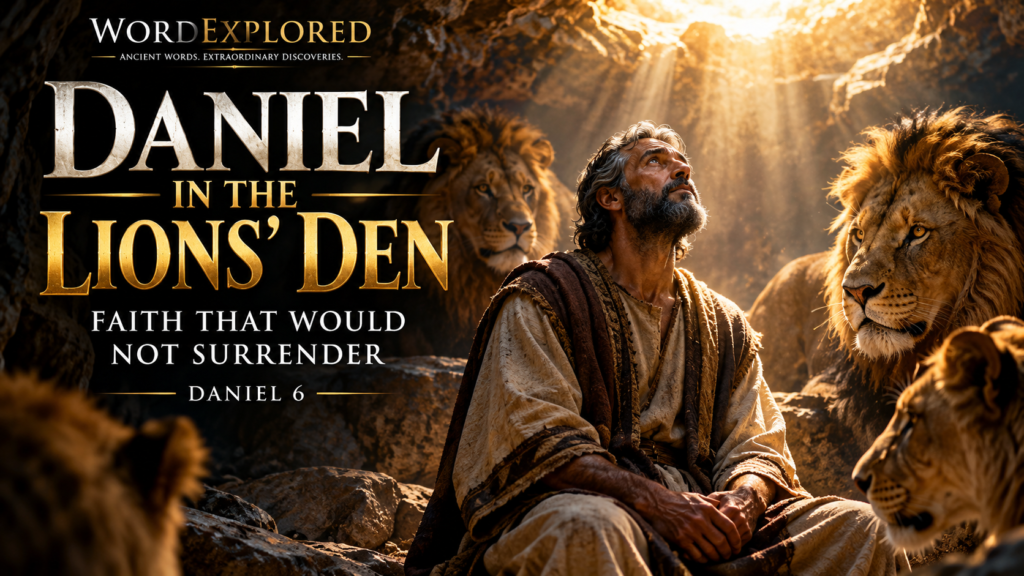
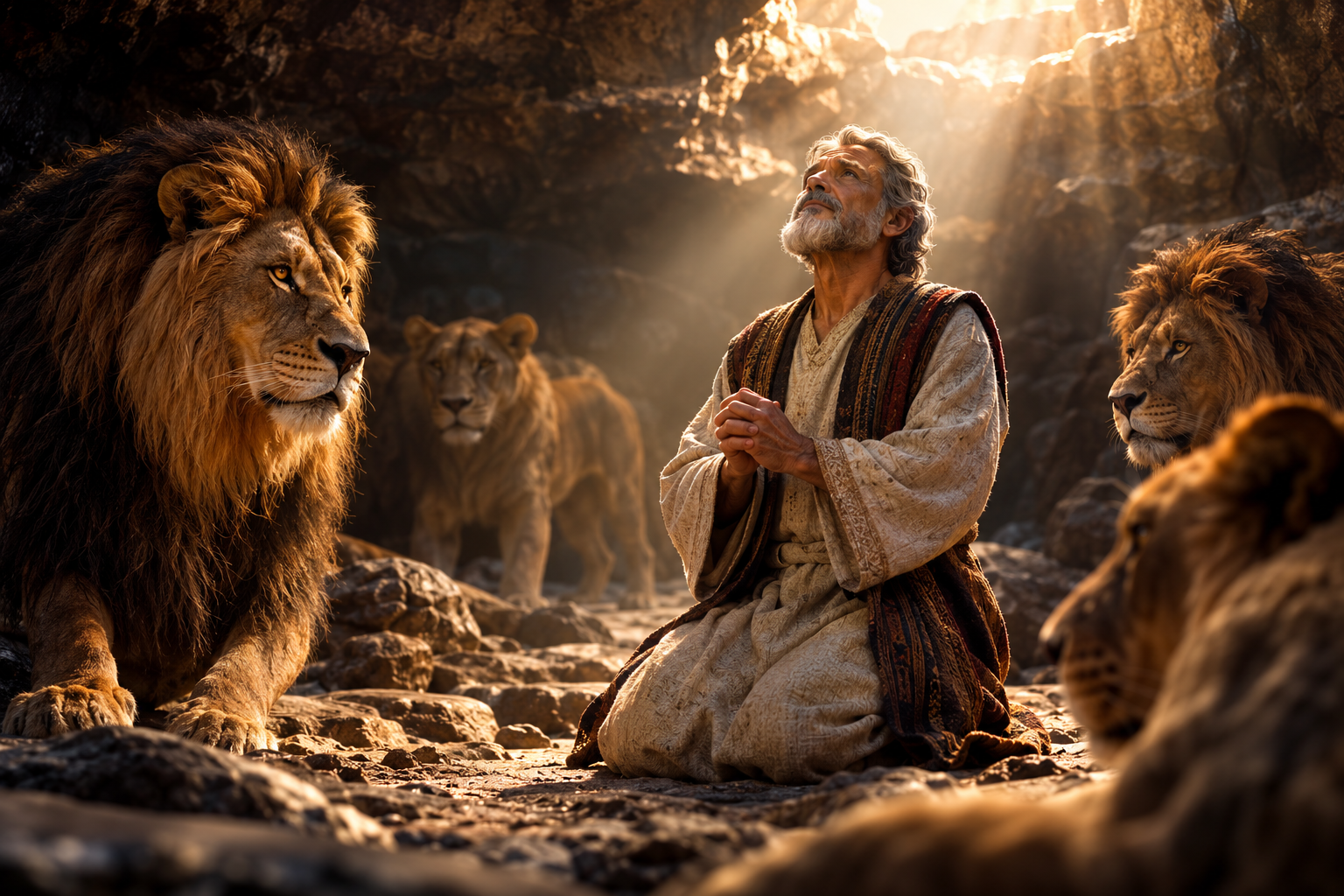
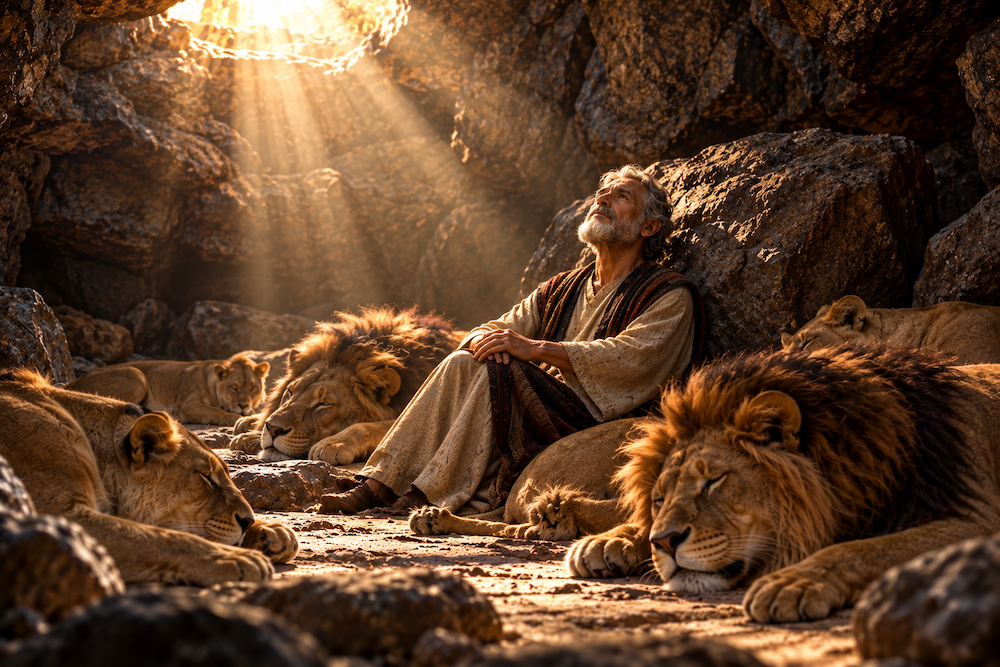
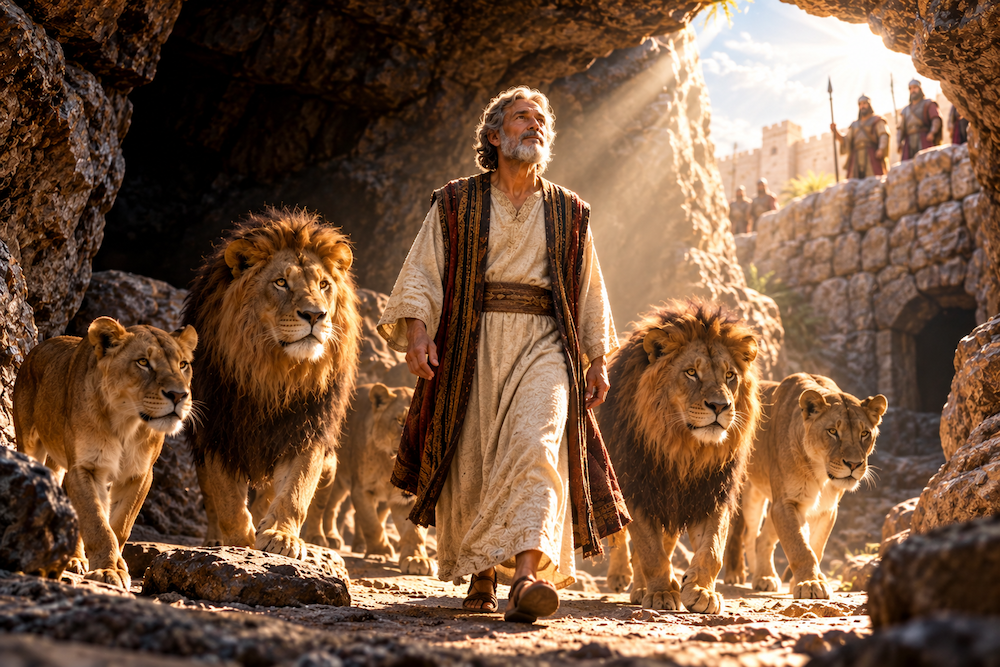
We should resist filling the silence with invented details. Scripture does not tell us the den’s dimensions, the number of lions, the exact architecture or Daniel’s thoughts during the night. The danger is real within the account; the atmosphere of any illustration is an artistic reconstruction.
How Did God Save Daniel from the Lions?
At first light Darius hurried to the den and called out anxiously, asking whether Daniel’s God had been able to rescue him. Daniel answered that God had sent his angel and shut the lions’ mouths (Daniel 6:19–22). He declared that he had been found innocent concerning the accusation and had done no wrong to the king.
Daniel was lifted out, and no injury was found on him. The narrator explicitly links his deliverance to his trust in God (Daniel 6:23). The text credits God, not Daniel’s skill with animals or a secret escape route. Although an angel is named, Scripture does not describe the angel’s appearance; luminous figures in illustrations are therefore artistic interpretation, not eyewitness evidence.
The chapter then records a disturbing punishment: the accusers and their families were thrown to the lions and killed (Daniel 6:24). This severe act of ancient royal power must not be softened into a cheerful ending, nor treated as a command for Christians to imitate collective punishment.
Darius subsequently issued a proclamation honouring Daniel’s God as living and enduring, whose kingdom cannot be destroyed (Daniel 6:25–27). The narrative does not tell us whether this amounted to a lasting personal conversion. It closes by reporting Daniel’s prosperity during the reigns named in Daniel 6:28.
What Extraordinary Details Are Hidden in Daniel Chapter 6?
First, Daniel’s opponents could not discover administrative wrongdoing. His faith was targeted precisely because his professional integrity left them no other opening (Daniel 6:4–5). The lesson begins in everyday work, long before the den.
Second, Daniel gave thanks while danger was already approaching (Daniel 6:10). Gratitude did not mean that the threat was imaginary. It was part of a faithful routine maintained even when the consequences changed.
Third, the sleepless person in the story is the king, not explicitly Daniel (Daniel 6:18). The ruler with earthly authority cannot undo the predicament he helped create, while Daniel’s night inside the den is described without invented interior dialogue.
Fourth, Daniel is not assigned an exact age. Because his career spans multiple reigns, he is often pictured as mature, but the popular image of a teenage Daniel in this episode is not established by Daniel 6.
Fifth, the identity of Darius the Mede remains historically debated. The Persian conquest of Babylon is conventionally dated to 539 BCE and associated with Cyrus II, but the Darius of Daniel 5–6 is not securely identified with an independently documented ruler. We can explain the narrative without pretending that uncertainty has been settled.
What Does Daniel in the Lions’ Den Really Teach About Faith?
The centre of this chapter is the living God, not a formula for guaranteed safety. Darius can sign an order, seal an entrance and pronounce a penalty, but the narrative shows that his authority is not ultimate. God’s enduring kingdom stands in contrast to fragile human power (Daniel 6:26–27).
Daniel’s example also joins honest civic service with allegiance to God. He served his administration well yet would not surrender his worship. This resonates with Jeremiah 29:7, which calls exiles to seek the welfare of the place where they live, and with Acts 5:29, where the apostles insist on obedience to God when human commands conflict with it.
But we must not turn the miracle into a promise that every faithful Christian will avoid tragedy. Hebrews 11 celebrates faith that shut lions’ mouths and also honours believers who endured suffering and death (Hebrews 11:33–38). Daniel’s rescue reveals God’s power; it does not give us control over outcomes.
Christians may also notice a restrained parallel between Daniel’s unjust condemnation and vindication and the suffering and resurrection of Jesus. This is a theological resonance, not a claim that every detail of Daniel 6 directly predicts the Gospels.
PERSONAL REFLECTION & PRAYER
Would the people who know my ordinary work describe me as honest and dependable? Which habits of prayer and gratitude am I cultivating before pressure arrives? Can I hold my convictions without treating others with contempt? Can I trust God even when the outcome is uncertain?
Prayer: Living God, give me integrity in my work, humility in my decisions and courage when obedience is costly. Teach me to pray faithfully, to act justly and to trust your wisdom without demanding a particular outcome. Amen.
EXPLORE THE STORY DEEPER ;
- Watch our Video above to see the story come alive
- Listen to our detailed Deep Dive (Below)
QUESTIONS READERS OF DANIEL 6 OFTEN ASK
Why was Daniel thrown into the lions’ den?
His rivals engineered a thirty-day prohibition on petitions to anyone but the king, then accused him of continuing to pray to God (Daniel 6:6–13).
Did Darius want Daniel to die?
No. The chapter says he was distressed and tried until sunset to rescue Daniel (Daniel 6:14).
How many lions were in the den?
Daniel 6 does not give a number.
Was Daniel an old man?
The passage does not state his age. His career across multiple reigns suggests a later stage of life than Daniel 1.
Why did Daniel face Jerusalem?
It recalled covenant worship and the hope of restoration from exile; compare 1 Kings 8:46–50.
Did an angel appear to Daniel?
Daniel says God sent his angel to shut the lions’ mouths, but the passage does not describe its visible appearance (Daniel 6:22).
Does Daniel’s survival mean Christians will always be rescued?
No. Hebrews 11:33–38 describes both extraordinary rescues and faithful suffering.
WordExplored — Ancient Words. Extraordinary Discoveries.
Daniel in the Lions' Den
Discover Daniel's extraordinary courage, unwavering faith and trust in God as he faces the lions' den. Explore the powerful lessons of faith, prayer and divine deliverance from Daniel 6.
▶ LISTEN TO THE STORY