

The Father Who Never Stopped Loving
Why Did Jesus Tell the Parable of the Prodigal Son?
A young man demands his inheritance, leaves home and loses everything. He returns expecting to beg for work, but his father runs to embrace him. Yet Jesus does not end the story at the reunion. Another son stands outside, angry that mercy has become a celebration. Why does Jesus leave us at that doorway?
In Luke 15, tax collectors and sinners draw near to Jesus, while Pharisees and scribes complain that He welcomes them and eats with them (Luke 15:1–2). Jesus answers with three stories of what was lost and found: a sheep, a coin and finally a family divided by more than distance. The final parable asks not only whether the lost can return, but whether those who stayed will rejoice.
Why Did the Younger Son Leave His Father’s Home?
An inheritance demanded before its time
“Father, give me the portion of goods that falleth to me” (Luke 15:12, KJV). The younger son asks for his share while his father is alive. The father divides his property between the sons. In the family world Jesus’ audience knew, this was a startling demand. Deuteronomy 21:17 describes a firstborn son’s double share, although Jesus gives no exact figures for this family.
Not many days later, the younger son gathers his possessions and travels to a distant country. There he squanders his wealth through reckless living (Luke 15:13). Jesus does not describe every purchase or action. What matters is the speed with which apparent freedom becomes loss.
How Did the Prodigal Son Lose Everything?
Famine, hunger and the pig fields
After the money is gone, a severe famine strikes. The young man takes work feeding pigs and becomes so hungry that he longs for their food, yet nobody gives him anything (Luke 15:14–16). For Jewish hearers familiar with the dietary restrictions of Leviticus 11, tending pigs makes the depth of his humiliation especially vivid.
The turning point comes not with another gift of money, but with recognition: “And when he came to himself” (Luke 15:17, KJV). He remembers that his father’s hired workers have food. He decides to go home, admit that he has sinned against heaven and his father, and ask to be treated as a hired servant.

Was His Return Driven by Hunger or Repentance?
The story does not require us to choose between hunger and remorse. His need awakens him, and his intended words include a direct confession. He can no longer pretend that his choices have brought him freedom. He sets out for home without knowing how his father will respond.
Why Did the Father Run to Meet the Prodigal Son?
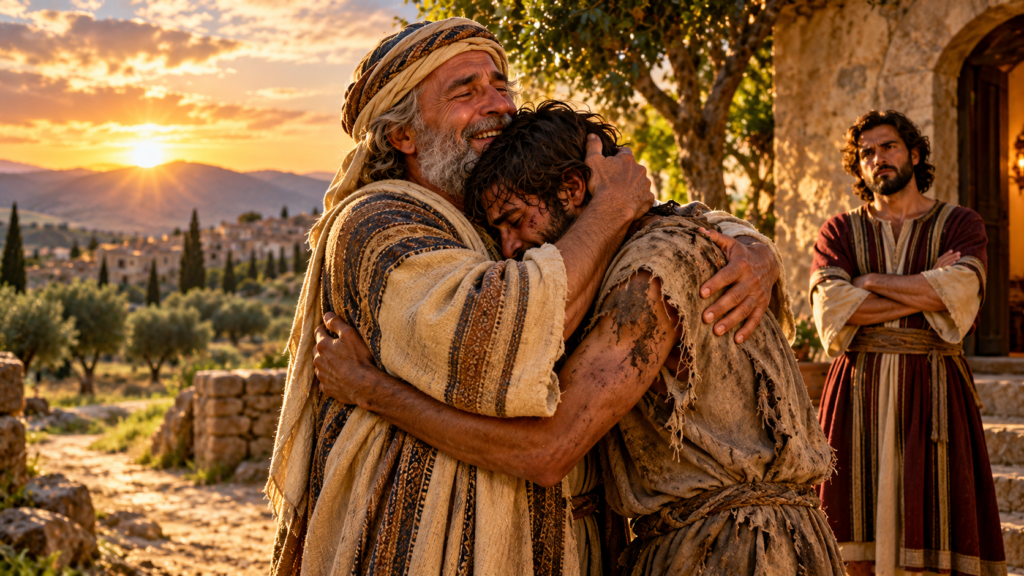
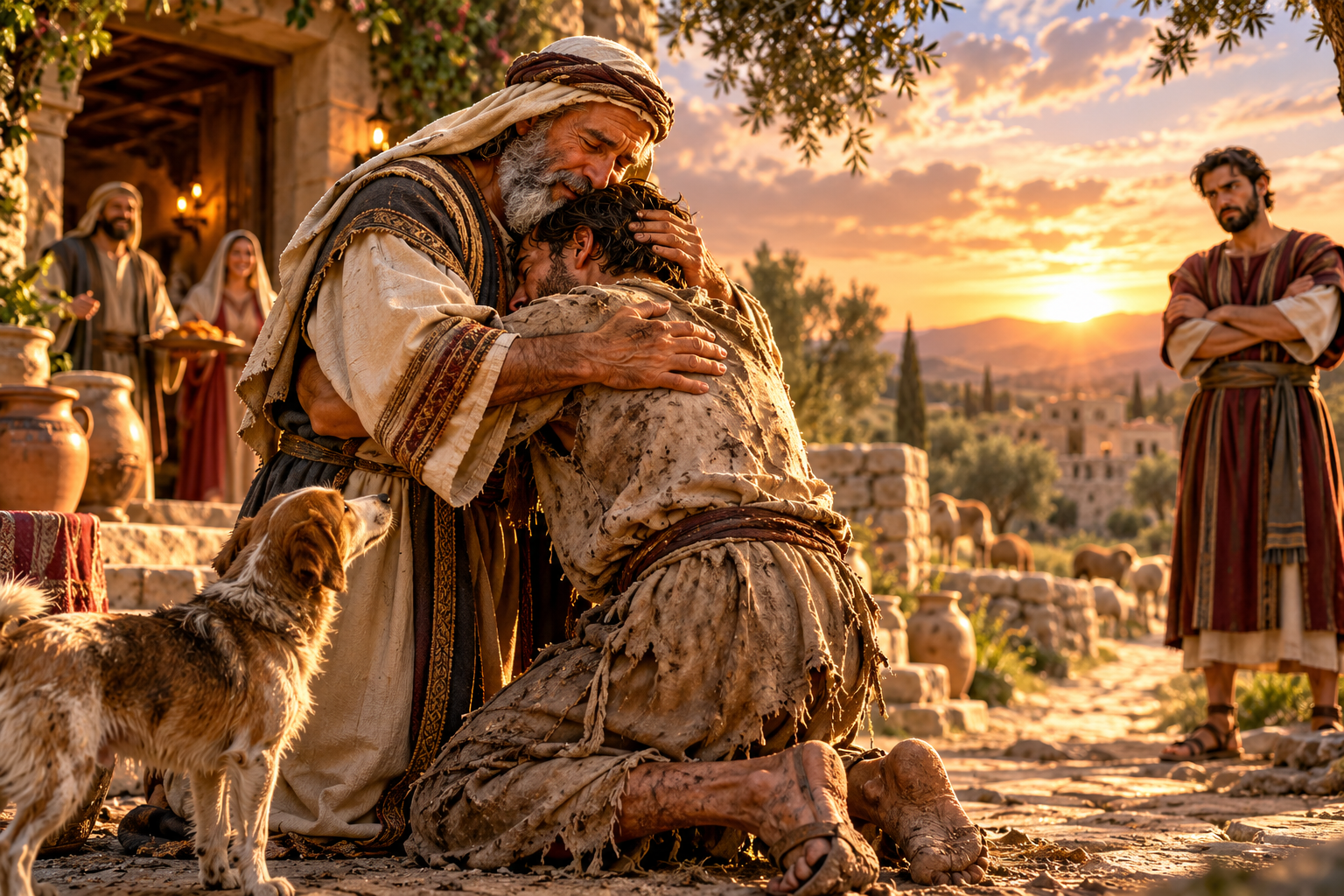
“But when he was yet a great way off, his father saw him, and had compassion” (Luke 15:20, KJV). The father runs, embraces and kisses him. Jesus tells us what happened at that moment, not that the father watched the road every day.
The robe, ring, sandals and celebration
The son confesses his sin and unworthiness. Before he can complete his rehearsed request for employment, his father orders the best robe, a ring, shoes and the fattened calf (Luke 15:21–23). These are visible signs of welcome and restored dignity, not a contract for repayment.
The father declares: “For this my son was dead, and is alive again; he was lost, and is found” (Luke 15:24, KJV). He speaks of relational loss and restoration, not a literal death and resurrection. The household begins to celebrate.

Why Was the Older Brother Angry at the Celebration?
The older brother returns from the fields and hears music and dancing. Learning the reason, he refuses to enter. The father comes out to plead with him (Luke 15:25–28). The son protests that years of service have not earned him such a feast. He calls the returned brother “this thy son,” distancing himself from the relationship.
A second son outside the father’s joy
The older brother alleges that the younger wasted the inheritance with prostitutes (Luke 15:30). That is his accusation; the narrator has not independently supplied those details. His hurt and resentment are real, but he cannot yet celebrate another person’s restoration.
The father answers tenderly that the older son is always with him and that what he has is his. Then he changes the language: “this thy brother was dead, and is alive again; and was lost, and is found” (Luke 15:32, KJV). Jesus never tells us whether the older brother goes inside.
What Extraordinary Details Are Hidden in Luke 15?
The word “prodigal” never appears in Jesus’ telling
“Prodigal” is a later title meaning wasteful or recklessly extravagant. Jesus begins simply with a man who had two sons. That matters because both sons are essential to the meaning of the parable.
The father goes out to both sons
He runs toward the returning younger son and later comes out to entreat the older son. One has been distant geographically; the other stands apart in spirit. The father takes the initiative with each.
The missing ending is part of the message
The lost sheep and lost coin stories end in rejoicing. This story also celebrates a return, but it closes with someone unwilling to join the joy. The unanswered question reaches Jesus’ original critics and readers today.
What Does the Prodigal Son Teach About God’s Forgiveness?
Grace welcomes repentance without calling wrongdoing good
The younger son’s choices bring real damage. The father does not declare those choices wise. Yet compassion meets the son before he can negotiate his place in the household. The parable portrays a welcome that cannot be purchased through humiliation or earned through perfect words.
Faithfulness must not become a transaction
The older son sees his years of service through the lens of reward and comparison. His father does not dismiss him; he invites him into relationship and shared joy. Jesus challenges a kind of outward obedience that has lost sight of mercy.
The invitation to mercy remains open
Luke 15 begins with people objecting to Jesus’ welcome of sinners. The unresolved ending asks whether we will join that welcome. The story illustrates divine compassion; it does not mean every human reconciliation is safe, immediate or free of necessary boundaries.
Elsewhere Scripture describes the Lord as merciful and gracious (Psalm 103:8–13) and calls people to return to Him for pardon (Isaiah 55:6–7). These passages echo the parable’s themes without replacing Jesus’ own words.
Personal Reflection
Have you been avoiding an honest return to God because you fear rejection? Are you struggling to rejoice when someone else receives forgiveness? What might it look like to practise both compassion and wise accountability in your relationships?
Prayer
Heavenly Father, thank You for the mercy You show to those who turn toward You. Give us the courage to confess our wrongs, the humility to receive Your grace and the generosity to rejoice when others find restoration. Guard our hearts from resentment and teach us to love with truth and wisdom. In Jesus’ name, Amen.
Questions Many People Ask
Where is the Prodigal Son story in the Bible?
Jesus tells the parable in Luke 15:11–32, after the lost sheep and lost coin stories.
What does “prodigal” mean?
It describes someone recklessly wasteful or extravagant. The term is a traditional title, not a word used in the passage.
Why did the father give his son the inheritance?
Luke says the father divided his living between his sons; it does not explain his private motives.
Why did the son feed pigs?
He had lost his money during a famine and accepted work feeding pigs. The detail underscores his poverty and humiliation.
What do the robe, ring and sandals mean?
They mark the father’s public welcome and restoration of the younger son’s dignity.
Why was the older brother angry?
He felt overlooked despite his years of service and resented the celebration for his returning brother.
Did the older brother ever enter the feast?
Jesus does not say. The open ending asks the listener how they will respond to mercy.
Continue Your Journey Through God’s Word
Experience this extraordinary Bible story in a whole new way. Watch the cinematic video above to see the story come alive, then listen to our in-depth WordExplored podcast below for fascinating historical insights, deeper biblical understanding and powerful lessons you may have missed.
Listen Deeper: The WordExplored Podcast
Join Daniel and Rachel for a thoughtful exploration of the father’s welcome, the older brother’s resentment and the question Jesus leaves unanswered. Discover how Luke 15 speaks to repentance, mercy and the challenge of rejoicing in another person’s restoration.
Continue Exploring
Continue through Luke 15 with Jesus’ parables of the lost sheep and lost coin (Luke 15:3–10). Then read Psalm 103:8–13 on the compassion of God and Isaiah 55:6–7 on turning to the Lord for mercy. Together, these passages invite us to consider the joy of being found—and the grace of welcoming others.
The Prodigal Son
Discover Jesus' powerful parable of a lost son, a father's unconditional love and the joy of forgiveness. Explore the timeless lessons of repentance, mercy and restoration found in Luke 15:11–32.
▶ LISTEN TO THE STORY